

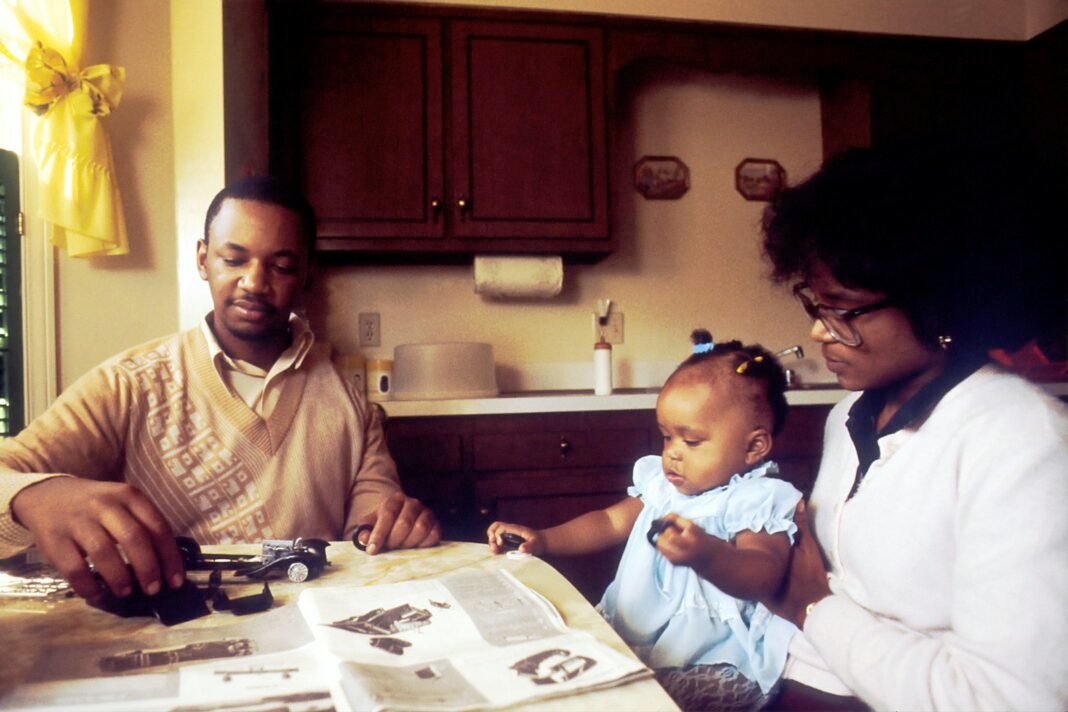
Picture Emeka and Ngozi in Enugu, two years into marriage. It’s the week rent is due, and Emeka’s phone rings: his younger brother needs ₦150,000 for school fees. Emeka quietly sends ₦100,000. Ngozi finds out from the bank alert. By evening, the argument is not really about the money anymore. It’s about trust, respect and “Why didn’t you tell me?” If money talks in your relationship often end in fights, you’re not alone. This guide shows you how to have money conversations with your partner calmly and honestly, using simple steps and scripts.
Money conversations with your partner are honest, regular talks about income, spending, debt, savings, family support and goals. They work best when you plan a calm time, share openly without blame, agree on shared goals and a simple system (such as yours, mine and ours), and review it together every month.
Key takeaways
- Money disagreements are one of the strongest predictors of divorce in research on couples, so they deserve attention.
- Most money fights are really about values, trust and fears, not just naira.
- Plan calm, regular money talks instead of arguing when a crisis hits.
- Agree together on how to handle family requests and black tax.
Why money fights happen
Money arguments are common, and they matter. A 2012 study by Jeffrey Dew, Sonya Britt and Sandra Huston, which followed 4,574 couples in the United States, found that financial disagreements were the strongest type of disagreement for predicting divorce. The Gottman Institute, which studies couples, also notes that money conflicts tend to be persistent and emotional.
Money fights often happen because:
- Different backgrounds: one partner grew up with plenty, the other with sapa.
- Different values: one saves for security, the other spends to enjoy life.
- Secrecy: hidden debts, spending or family support.
- Family pressure: requests from parents, siblings and extended family.
- Stress: inflation and rising costs put everyone on edge.
Underneath, the fight is usually about something deeper: feeling respected, safe or included.
When to have the first money talk
Ideally, before marriage or moving in together. But it’s never too late. Good times to talk include:
- When a relationship becomes serious or engagement is near.
- Before combining finances or making a big purchase.
- When income changes, such as a new job, job loss or a baby.
- Regularly, once a month, even when nothing is wrong.
A 6-step money conversation
- Pick a calm time. Not when rent is due tomorrow, and not in front of family. Agree on a time in advance: “Can we sit down on Saturday morning to talk about our money plans?”
- Start with goals, not problems. “What do we want our life to look like in three years?”
- Share the full picture. Income, debts, savings, loans and regular family support. No secrets.
- Talk about money stories. “How was money handled in your house growing up?” This builds understanding.
- Agree on a simple plan. A budget, savings goals and who pays for what.
- Set a review date. Check in monthly to see what’s working and adjust.
Use our guide on how to create a budget to build your shared plan.
Helpful phrases
- “I feel anxious when we don’t have savings. Can we plan an emergency fund together?”
- “I want to support my family, and I also want us to be secure. Can we agree on a limit?”
- “I’m not blaming you. I just want us to be on the same page.”
For more on calm conversations, see our guide on how to handle conflict in relationships.
Handling black tax as a couple
In many Nigerian families, supporting parents and siblings is expected and valued. The goal is not to stop helping, but to help as a team:
- Agree a monthly family support budget that you both accept.
- Be transparent: tell each other about requests before sending money.
- Treat both families fairly.
- Have a plan for emergencies, such as a medical bill, versus regular requests.
- Say no together when necessary, kindly and respectfully.
Read our guide on black tax and supporting family for more ideas.
Yours, mine and ours: account set-ups
| Approach | How it works | Good for |
|---|---|---|
| Fully joint | All income goes into shared accounts | Couples with high trust and similar spending habits |
| Fully separate | Each keeps their own money and splits bills | Couples who value independence, with clear agreements |
| Yours, mine and ours | A joint account for shared bills and goals, plus personal accounts | Many couples, because it balances teamwork and freedom |
There’s no single right answer. What matters is that you both agree and that the system is transparent.
When to get help
- A counsellor or trusted mentor can help if money arguments keep repeating or damage your relationship.
- A qualified financial adviser can help with debt, investments and long-term planning.
- If one partner controls all the money, hides income, forbids the other from working or uses money to threaten or punish, that may be financial abuse. Please speak to someone you trust and seek professional support. If you are in immediate danger, call 112.
Try this this week
Ask your partner to pick a calm 30-minute slot this weekend. Each of you writes down your top three money goals and your biggest money worry. Share them, listen without interrupting and agree on one small shared step.
Frequently asked questions
When should couples talk about money?
Ideally before marriage or moving in together, and then regularly, such as once a month. It’s also important to talk when income changes, before big purchases and when family requests come up. Regular, calm check-ins prevent small issues from becoming big fights.
Should married couples have joint accounts?
It depends on the couple. Some prefer fully joint accounts, some keep money separate, and many use a “yours, mine and ours” system with a joint account for shared costs plus personal accounts. The best system is one you both agree on and that keeps things transparent.
How do we handle family financial requests together?
Agree on a monthly family support budget, tell each other about requests before sending money and treat both families fairly. Decide in advance how to handle emergencies versus regular requests, and support each other when you need to say no kindly.
Final thoughts
Money doesn’t have to divide you. When you talk early, openly and regularly, money can become something you build together. Start with goals, share the full picture, agree on a simple system and review it every month. The first conversation might feel awkward, but it could save your relationship a lot of pain.
Build a shared plan with our budgeting guide, and join the Mindset.ng newsletter for practical relationship and money guides.
Related reading
- How to communicate better in relationships
- Black tax: supporting family without going broke
- How to build a healthy money mindset
Sources
- Dew, J., Britt, S., & Huston, S. (2012). Examining the relationship between financial issues and divorce. Family Relations, 61(4), 615–628.
- The Gottman Institute. 8 ways to have lower conflict conversations about money.
Written and fact-checked by the Mindset.ng Editorial Team in line with our Editorial Policy. This article is for educational purposes only and is not personalised financial advice or counselling. Read our Disclaimer. Last updated: 25 September 2026.