

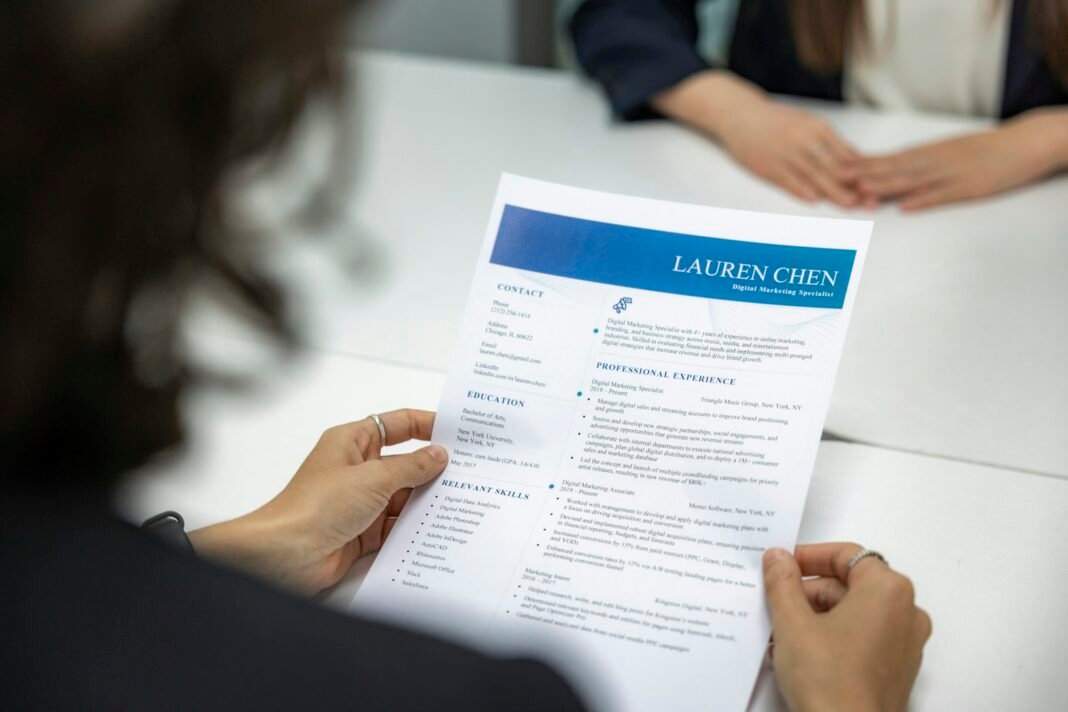
Every week, recruiters in Lagos, Abuja and Port Harcourt go through piles of CVs that look almost identical: “Hardworking, God-fearing, able to work under pressure.” Many list state of origin, marital status and every primary school ever attended. Most get a few seconds of attention before they’re put aside. Here’s how to make yours the one that gets the call.
A CV that gets interviews in Nigeria is clear, tailored to the specific job and focused on measurable achievements rather than a list of duties. For most graduates and early-career professionals, one to two pages is enough. Put the most relevant information where a recruiter will see it first, use a simple layout that applicant tracking systems can read, and leave out personal details the employer hasn’t asked for.
Key takeaways
- Recruiters often decide in seconds whether to read further, so lead with your strongest, most relevant points.
- Tailor your CV to each role, using honest keywords from the job description.
- Show results with numbers wherever you can.
- Leave out religion, state of origin, date of birth and photos unless the employer asks.
Why most CVs get rejected so quickly
In an eye-tracking study by the job site Ladders (2018), recruiters spent an average of 7.4 seconds on their first screen of a CV. CVs with simple layouts, clear headings and bulleted achievements held attention best, while cluttered designs, multiple columns and long paragraphs performed poorly. Seven seconds isn’t the whole hiring decision, but it decides whether your CV gets a proper read.
In Nigeria’s crowded job market, where popular graduate trainee programmes attract very large numbers of applicants, that first glance matters even more.
The ideal CV structure
- Contact details: full name, phone number, a professional email address, city and state, and your LinkedIn URL.
- Professional summary: two or three lines on who you are, your key skills and the value you offer, tailored to the role.
- Work experience: job title, organisation, dates and three to five achievement-focused bullet points per role, most recent first.
- Education: degree, institution, class of degree (if it helps you) and year.
- NYSC: your service year and place of primary assignment, with achievements if the work was relevant.
- Skills and certifications: relevant software, tools, languages and professional certifications such as ICAN, CIPM or Google certificates.
Write achievements, not duties
Duties describe your job. Achievements prove you were good at it.
- Weak: “Responsible for social media.”
- Strong: “Grew Instagram followers from 2,000 to 15,000 in eight months and generated 120 qualified leads through targeted campaigns.”
- Weak: “Handled customer complaints.”
- Strong: “Resolved an average of 40 customer complaints a week and cut response time from two days to same-day.”
Use the formula action verb + task + measurable result. If you don’t have exact figures, use honest estimates or describe the scale, such as “for a team of 12” or “across three branches”.
No experience yet? What to include
Picture Tolu, a fresh graduate in Ibadan with no formal job yet. Her CV can still show evidence of skills through:
- NYSC or SIWES placements, with specific tasks and results.
- Final-year projects, especially with real data or real users.
- Volunteering, student leadership, church or mosque youth roles, or community projects.
- Freelance or side-hustle work, such as design, tutoring or social media for small businesses.
- Courses and certifications that match the job.
What to leave out
- Date of birth, marital status, religion, state of origin and local government area, unless the employer specifically asks.
- Photographs, unless requested.
- Your BVN, NIN or full home address. Your city is enough, and sharing sensitive data with unknown recruiters is risky. See our guide to online privacy under the NDPA.
- “References available on request.” This is assumed.
- Long lists of generic traits like “hardworking” or “team player” without evidence.
- Primary school details.
Make your CV ATS-friendly
Many larger employers and recruitment firms use applicant tracking systems (ATS) to sort CVs before a human sees them. To get through:
- Use standard headings such as “Work Experience”, “Education” and “Skills”.
- Avoid tables, text boxes, graphics, icons and unusual fonts.
- Use keywords from the job description, but only where they truthfully describe your experience.
- Save as a PDF unless a Word document is requested, and name the file clearly, for example Tolu-Adeyemi-CV.pdf.
Tailor it in 20 minutes
- Highlight the five most important requirements in the job advert.
- Rewrite your summary so it speaks directly to those requirements.
- Move your most relevant achievements to the top of each role.
- Remove anything that doesn’t support this application.
Common mistakes to avoid
- Spelling and grammar errors. Proofread, then ask someone else to check.
- An unprofessional email address. Create one with your name.
- Sending the same generic CV to every job.
- Exaggerating or lying. Background and reference checks can uncover it.
- Paying “recruiters” to submit your CV. Legitimate employers don’t charge candidates. Read our guide to spotting fake job offers.
Try this this week
Open your current CV and rewrite your top three bullet points using the formula: action verb + task + measurable result. Remove any personal details the employer didn’t ask for, such as religion, state of origin or date of birth. Save a clean PDF named after you, and send it to one trusted person for feedback.
Frequently asked questions
How long should a CV be in Nigeria?
One page is usually enough for fresh graduates, and two pages for experienced professionals. Senior executives and academics may need more. Whatever the length, the most relevant achievements should be easy to spot within the first few seconds.
Should I put my state of origin on my CV?
Not unless the employer specifically asks for it, for example in some public-sector applications. Most private employers don’t need it, and leaving it out keeps attention on your skills and achievements.
Do I need a cover letter?
If the application allows one, a short tailored cover letter can help you stand out. Keep it to three or four short paragraphs: why this role, what you offer, one relevant achievement and a polite close.
Final thoughts
A strong CV isn’t about fancy design or long lists. It’s a clear, honest, tailored story of what you’ve achieved and what you can do for this employer. Make every line earn its place, and you’ll turn more applications into interviews.
For practical career guides, join the Mindset.ng newsletter.
Related reading
- How to prepare for a job interview
- High-income digital skills worth learning
- Remote jobs in Nigeria: how to find legit openings
- How to spot fake job offers in Nigeria
- PAYE calculator 2026: what a job offer really pays
Sources
- Ladders (2018). Eye-tracking study shows recruiters look at résumés for 7 seconds, as reported by HR Dive.
- Nigeria Data Protection Commission. Official website (Nigeria Data Protection Act 2023).
Written and fact-checked by the Mindset.ng Editorial Team in line with our Editorial Policy. Last updated: 8 October 2026.